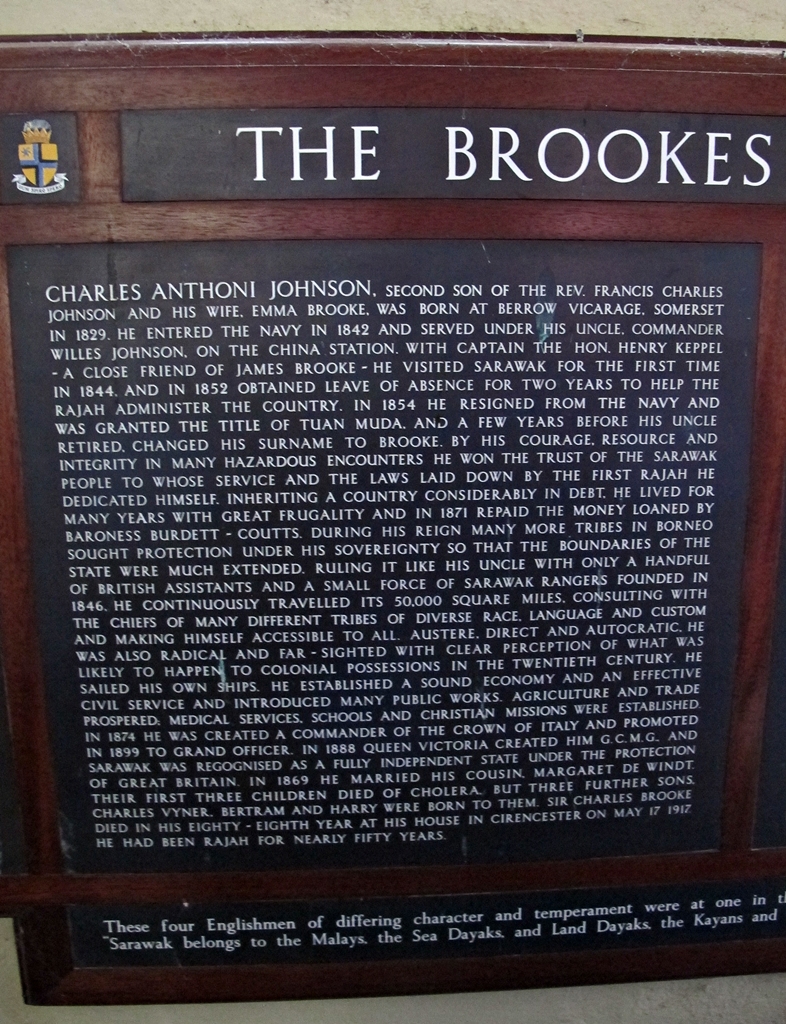
Many Sarawakians and friends of Sarawak may know the story of Sarawak under the Brooke family. Even those who didn't pay much attention in class back in their schooldays would vaguely remember being told that it all started in 1839. That was when the English adventurer James Brooke sailed up the Sarawak River and first sighted the rows of attap houses that make up the city now called Kuching. The rest, as they say, is history.
Well, I have often wondered about the story of James Brooke BEFORE that time ... What was he like as a child? Where did he live? What were his parents like? What kind of early education did he receive? What about his social life? Any girlfriends or boyfriends? What about the time he spent in India and England and Burma (where he fought and was wounded) and other parts he spent time in before he came to Sarawak?
I'm talking about the story before the story we all knew. In Hollywood terms, I believe it's known as a prequel. They did it for Indiana Jones, Luke Skywalker, Sherlock Holmes, Bruce Lee ... so why not Mr Brooke?
So I have started a bit of research on this, and over a series of postings I'd like to share what I have found so far. I'll also need your help. I welcome any new information you have come across on this theme, so that together we may piece together what could be a most interesting story.
Anyway let's begin ...
Childhood in India
James Brooke was born on 29 April 1803 in Secrore, a suburb of Benares in India. He was the second son of English judge (of the High Court of India) Thomas Brooke, and Anna Maria Stuart, who was born in Hertfordshire. She was the illegitimate daughter of Scottish peer Colonel William Stuart, 9th Lord Blantyre, and his mistress Harriott Teasdale.
James Brooke lived in India for the first 12 years of his life. I am still looking for details of his childhood life here, which I reckon would be pretty comfortable given his father's status. I will try to delve into this in more detail in a future posting.
Anyway at age 12, he was sent back to attend school in England.
James Brooke in School
So it was around 1815 that James Brooke started school at Norwich Grammar School (see map above to locate Norwich). The school is a very old one and still there, apparently doing quite well.
This is the school crest. You can find out more about Norwich School by clicking on HERE or THERE..
The school boasts some fine architecture. Below you see the school chapel, which I believe was already there during James Brooke's time.
Norwich School Chapel
Norwich Grammar School is closely associated with Norwich Cathedral
(original construction of which began in 1096, was completed in 1145,
and the final stone spire was erected in 1480)
At the time the headmaster was Mr. Edward Valpy (a brother of the famous Dr. Valpy of Reading). During Brooke's school days Dr. Samuel Parr, who at one time had been the headmaster, was a frequent visitor at the school.
Among James Brooke's schoolmates was Sir Archdale Wilson, the captor of Delhi in 1857 (link to this SITE for something on their comradeship), and George Borrow, English author of novels and travelogues.
James Brooke was a boy of marked generosity, truthfulness, and courage. Apparently on one occasion he saved the life of a school-fellow who had fallen into the river Wensum.
However the young James obviously didn't like school much. He ended his school life somewhat abruptly by running away.
I can't find any records of exactly how long he stayed at Norwich School but it seems that he did not stay long - perhaps 2 years at most. We do know that at age sixteen, he was appointed a cadet of infantry in Bengal. It is also mentioed in some writings that he was tutored at home in Bath (see later) for a while after he left school.
After Norwich Grammar School, records show that James also attended Honourable East India Company Military School, Addiscombe, Surrey. This was probably the preparatory training required for his intended military career.
James Brooke the Soldier
Brooke joined the army in India on 5 May 1819, as an Ensign to the 2/6th BNI. He transferred to the 18th BNI in 1824, was promoted to Lieutenant in the 6th BNI on 25 August 1821, and to Assistant Commissary-Gen on 1 May 1822.
On the outbreak of the First Burma War (1824-1826), he formed and drilled a body of native volunteer cavalry, which he commanded in a battle at Rangpur in Assam. Unfortunately on that occasion, he was wounded - most documents record the wound was in the lungs, but a few papers mention that a bullet hit him in the private parts (which may explain why he never married). In any case, this incident led to his being invalided home with a wound pension of 70 Sterling Pounds a year. At some point in his military years, he was also awarded the India Medal.
Apparently James Brooke was "struck off" on 13 Dec 1827 (not sure what this term means, but I reckon it suggests he was no longer fit for duty).
After an absence of upwards of four years he returned to India. It was an unsually long voyage, and he was unable to reach Bengal within the prescribed period of five years. He decided to resign from the East India Company's service in 1830, returning to England in the ship in which he had gone out, and visiting, in the course of his voyage, the Straits settlements of Penang, Malacca, and Singapore, China, and Sumatra. During this voyage he seems to have formed the projects which determined his subsequent career.
This is an intriguing period in young James Brooke's life that warrants further research, so I will probably return to it in a future posting.
Widcombe Crescent, Bath
Returning to Bath, where his family resided at No.1 Widcombe Crescent, in the latter part of 1831, James remained in England until 1834
Widcombe Crescent in Bath, Somerset, England is a terrace of fourteen Georgian houses built in 1808 by Thomas Baldwin, and designated a Grade I listed building.
No. 1 Widcombe Crescent, Bath
We know that in 1834, James Brooke purchased a small brig, and made a voyage to China. I am in search of material on his travels in China, but so far have not been able to find much.
In 1834, his mother Anna Maria died (aged 61), and in the following year his father Thomas Brooke also died (aged 75). James Brooke inherited a fortune of 30,000 Pounds Sterling, purchased a schooner of 142 tons, in which, after a trip to the Mediterranean, he sailed on 16 Dec. 1838 for Borneo. He named his vessel "The Royalist".
[A version of this article appeared in the "Josephians of the Seventies" blog in May 2011]


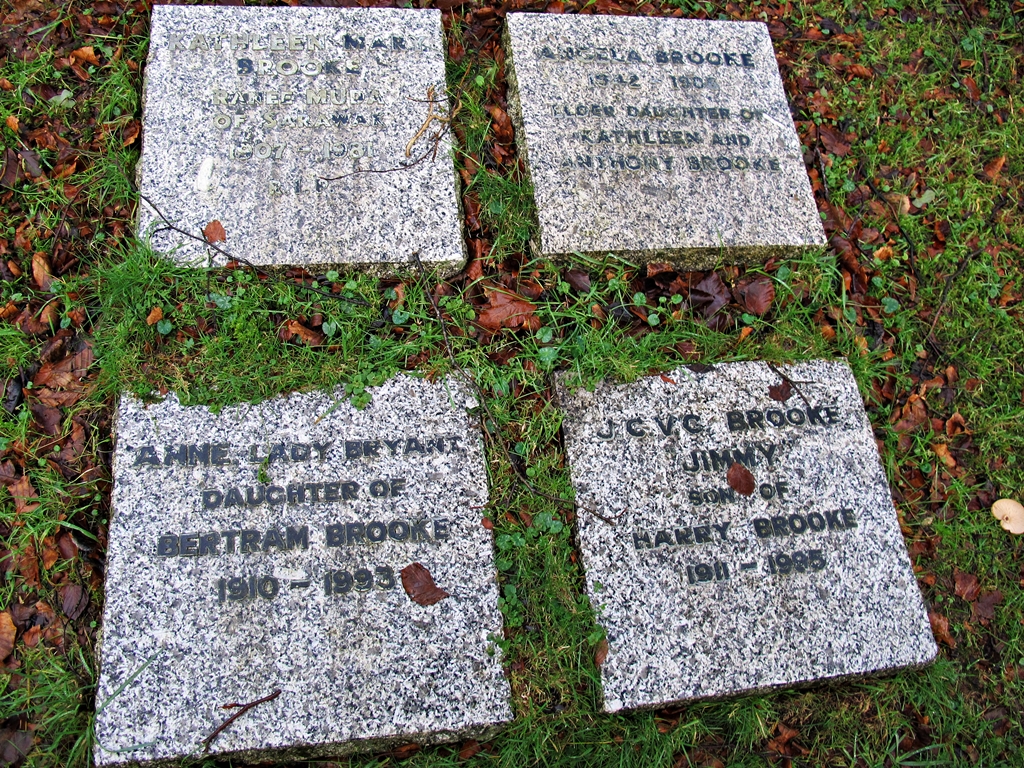
 Fig 8: Other Brooke graves near to the Rajahs